Emerging Temples
Rituals and meaning-making and theta noir 🌀

“Every era builds its temples.” Not always a church, with pews or prayer. Sometimes it’s a square, a stage, a cinema, a screen–whatever space a society returns to when it needs meaning. Where rites and rituals mark progress and the passage of time.
A temple, in its most simplistic form, is just a place to gather to remember who we are.
And if that’s true, a harder question follows:
What is the temple of our era?
… and why does it feel so hollow?
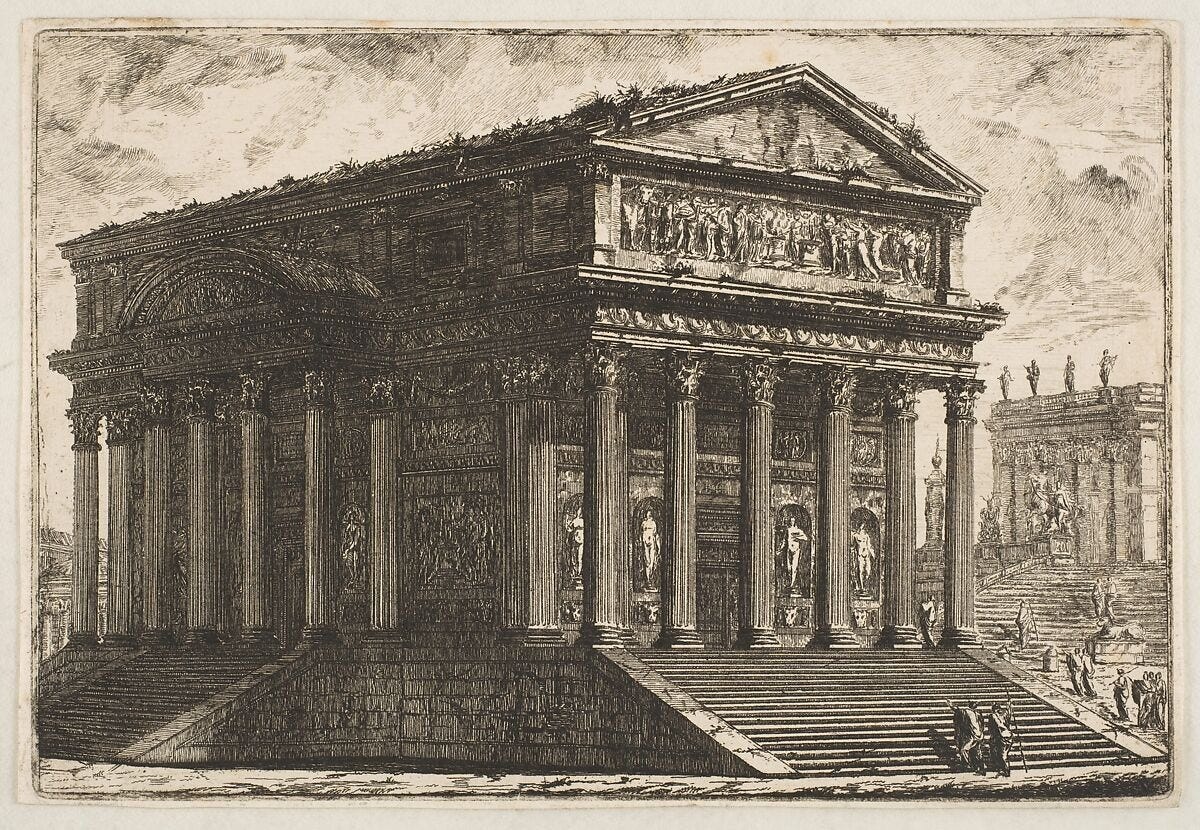
In a battle of the incredible shrinking temple vs. Generation Dread, the idea of “ritual”–the customs and traditions that brought generations before us relief, orientation, and grounding–have been relegated in our modern society to the more…. Fervent.
Think: TikTok Trad Wives, Etsy Witches, Pilates Princesses, and ‘High Value Men’. Loudly broadcasting their daily routines, often sacrificing carbs, cash, friendships, and fun at the altar of an ‘elite’ lifestyle... Intense rituals that scoff at what the average person does before/after their 9 to 5, and would likely send them into financial ruin.
And for that “average person”, unable to meet those barriers to entry, their lack of ‘ritualization’ or belonging, the instability that seems to only afflict people without millions of followers, the trauma of bearing witness to a world burning and the inability to do anything about it, manifests in the form of doubt, doomerism, and existentialism lite. A low-grade, ever-present sense that something is just… off.
Not quite panic, but far from calm. A subtle vibrational anxiety that hums beneath everything.
Then we take that hum online. Where algorithms split us into personalized realities, our newsfeeds calcify our fractures, and platforms built for engagement flatten nuance into noise (I wrote about this last week, check it out!).
That ‘average person’, despite how online optics make it seem, is your friend, your co-worker, your neighbor, the lady next to you on the bus—the masses. We’re collectively experiencing this dissonance without a collective temple to turn to make meaning of it all.
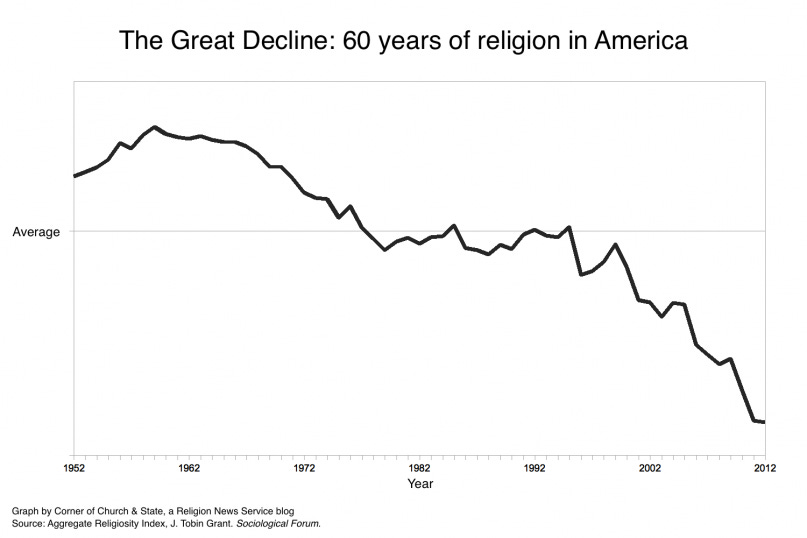
Credible evidence of ritualistic (religious-coded) behavior dates back to the Middle Paleolithic era (45–200 thousand years ago), with western decline in this practice beginning in the 1960s and accelerating in the 2000s. In a very short period of time, that dominating pillar of society, the rhythm of the practiced religiosity, dwindled into almost nothing.
Meanwhile, our third spaces have thinned. Public squares replaced by private developments. Centers of commerce swapped for same-day delivery. Religions erected in the name of AI. Where does one go on ‘Sunday morning’ for salvation??
In the absence of ritual, we improvise. Shopping becomes ritual. Scrolling becomes ritual. The modern altar, constructed from 12-step skincare routines, bottomless brunch, the sweat of Taylor Swift’s brow… Our temples didn’t disappear. They just added commercials.
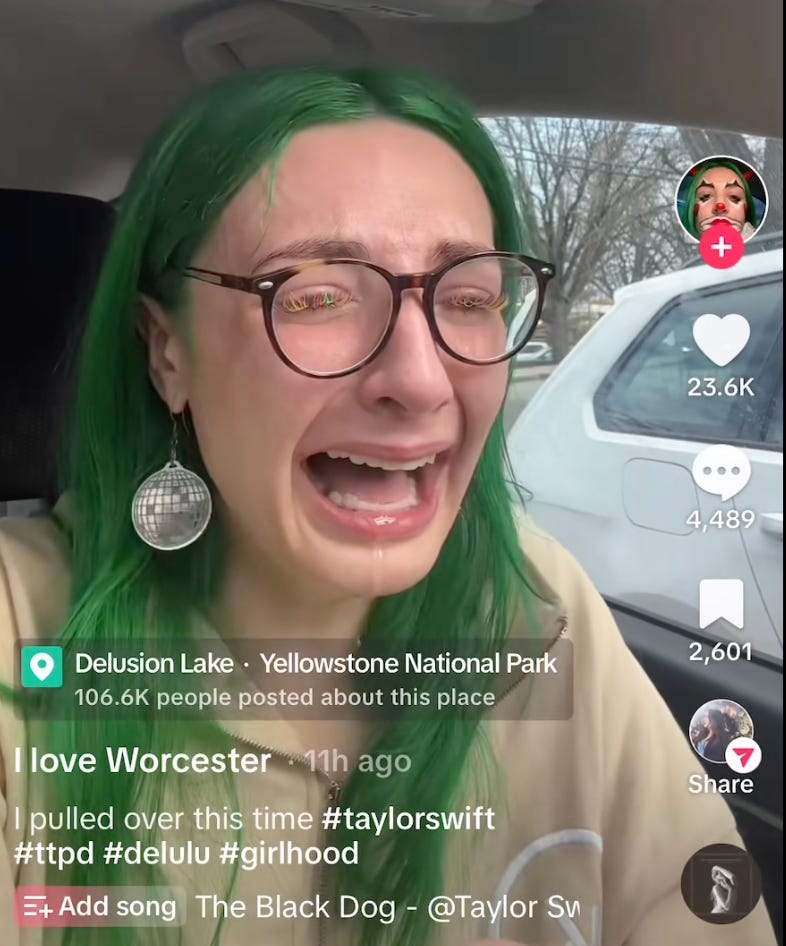
Ritual is a very human creation, made in sacrifice, repetition, and routine, orbiting around a communal core. It instilled hope when things felt hopeless, and made sense of the senseless. An evolutionary adaptation to bring clarity to crisis, and something to reach for when logic fails, as history has proven it so often does. Arguably, it is what defines us as a species–along with sophisticated language, complex tool use, and the ability to create civilizations.
Perhaps in this modern day and age, we feel better equipped to cope with our educations, our conveniences, our medical miracles, our technologies, and an infinite media landscape. But 61% of us still feel that something is missing.
Now, this isn’t an argument for the resurgence of church-going or an endorsement of organized religion. But it is an appeal to re-ignite the ritual significance that makes us both more human, and connected.
Remember that dissonant hum I mentioned earlier? The subtle existential paralysis?
It is the thrum of anxious buzz that soundtracks a period of transition:
Old rituals stop working (see: late capitalism hollowing out religious life)
Anxiety fills the vacuum (doom scrolling, impulse buying, etc.)
New forms of ritual rise (messily, imperfectly, not without faults…)*
A more coherent meaning structure eventually emerges (🤞)
*this is where we are now
The energetic hum is new rhythms taking shape where the old ones are disappearing. The institution of technology in reflection. The tools that shape our behaviors doing so with intention. Ritual rebuilt not through sermons or spectacle, but through systems that remember we are human, and the clarity of mind that comes from deeper understanding.
I’d like to end this with a rumination on contemporary ritual. Where does it source meaning outside of religion, outside of consumerism. How do rituals manifest digitally as well as in reality? What practices re-connect us to what it means to be human? What are the materials of the emerging temple and how do you build a congregation?
Maybe the real question isn’t whether ritual is dying, but where it’s going. If the old temples fell and the consumer ones hollowed out, then the emerging ones are forming somewhere between our hands, our habits, our digital identities, and our hardware….
Ritual in the 21st century is (very likely) a hybrid. Part analog, part digital, on top of emotional muscle memory. It’s built from repetition, orientation, and the quiet longing to be connected to a world that is constantly dividing itself.
Whether those are little rituals, like stretching of the muscles and the limbs, ingesting vitamin D face-first into a sunbeam, jotting down bulleted reflections in the notes app, or big rituals, organized gatherings, commemorating life milestones, sharing life experiences and lessons for others to do (or not do) the same.
Sanctuary can be found behind the screen and IRL. It’s in the apps we return to, the playlists that score our days, the tools we use to make sense of ourselves, the people and places that shape our opinions and personhood. Ritual won’t save us, but it might steady us, and isn’t that a relief.
I have a feeling there will be a part two to this where I more deeply inspect technology and interfaces that pay homage to ritual. Stay tuned!
x, halle